Blog

  • Showcasing Our Signature Project: The Ladder Effect!

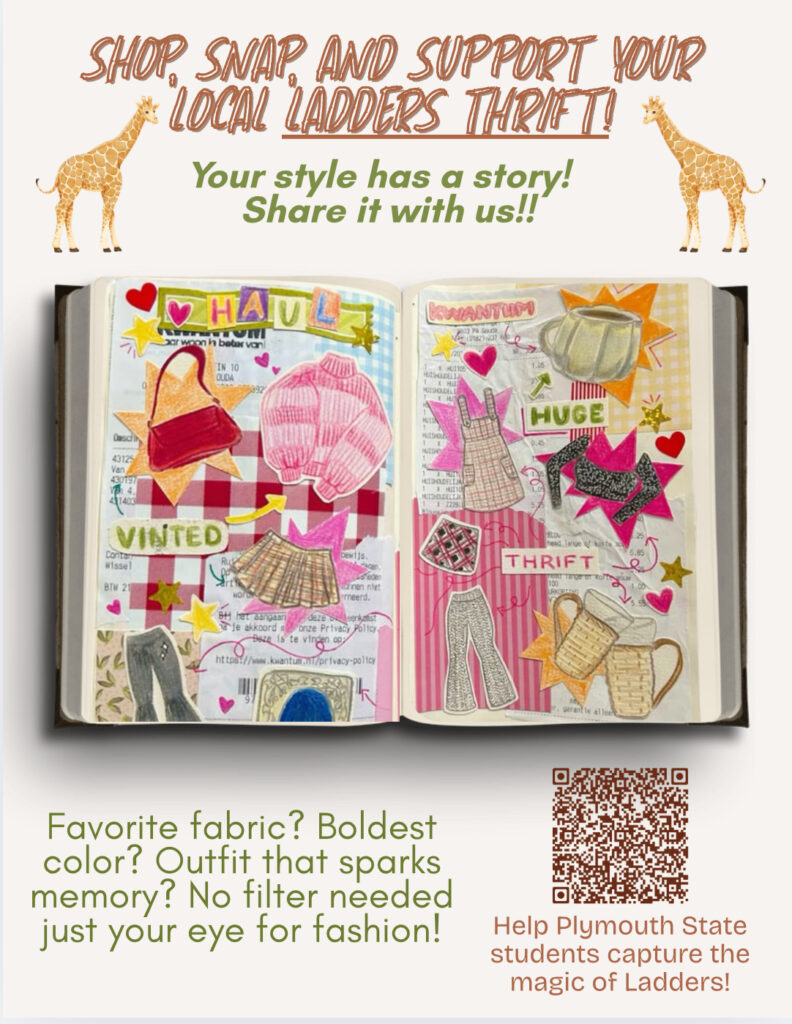
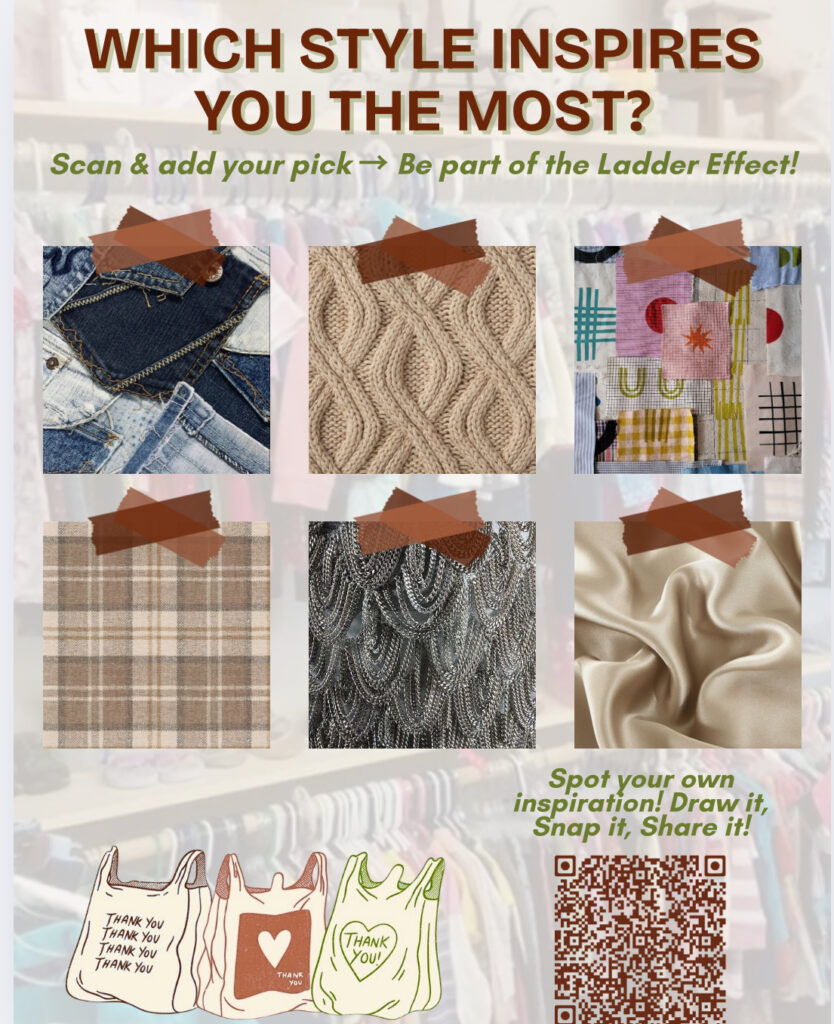
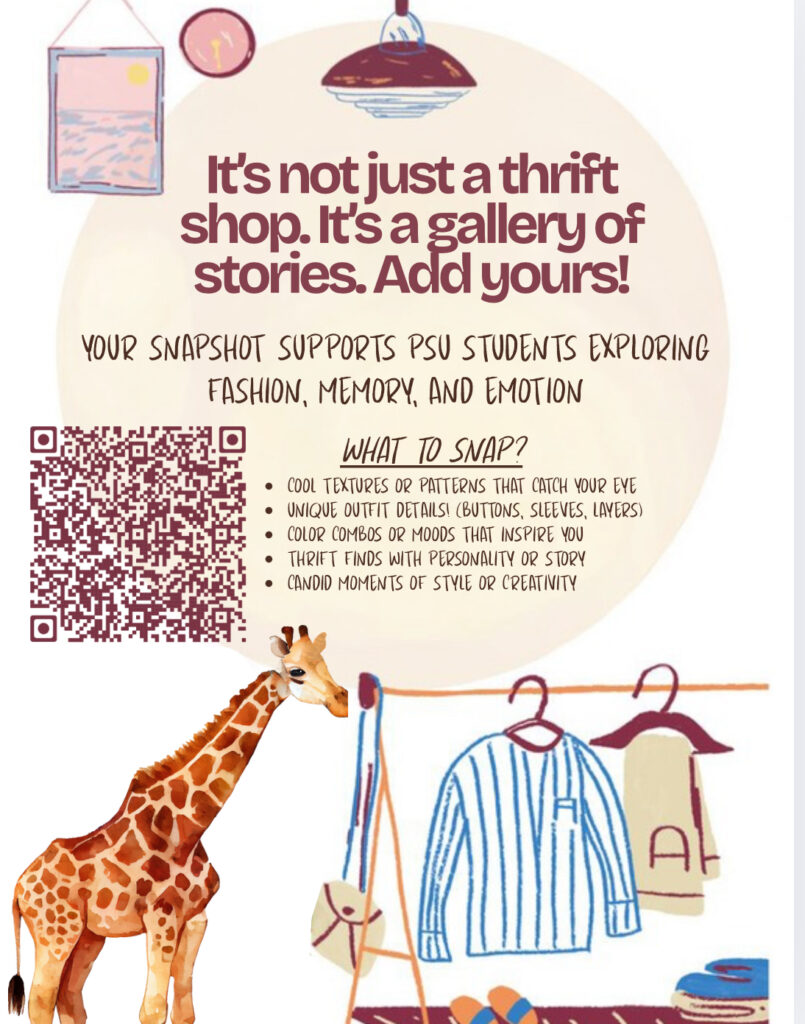
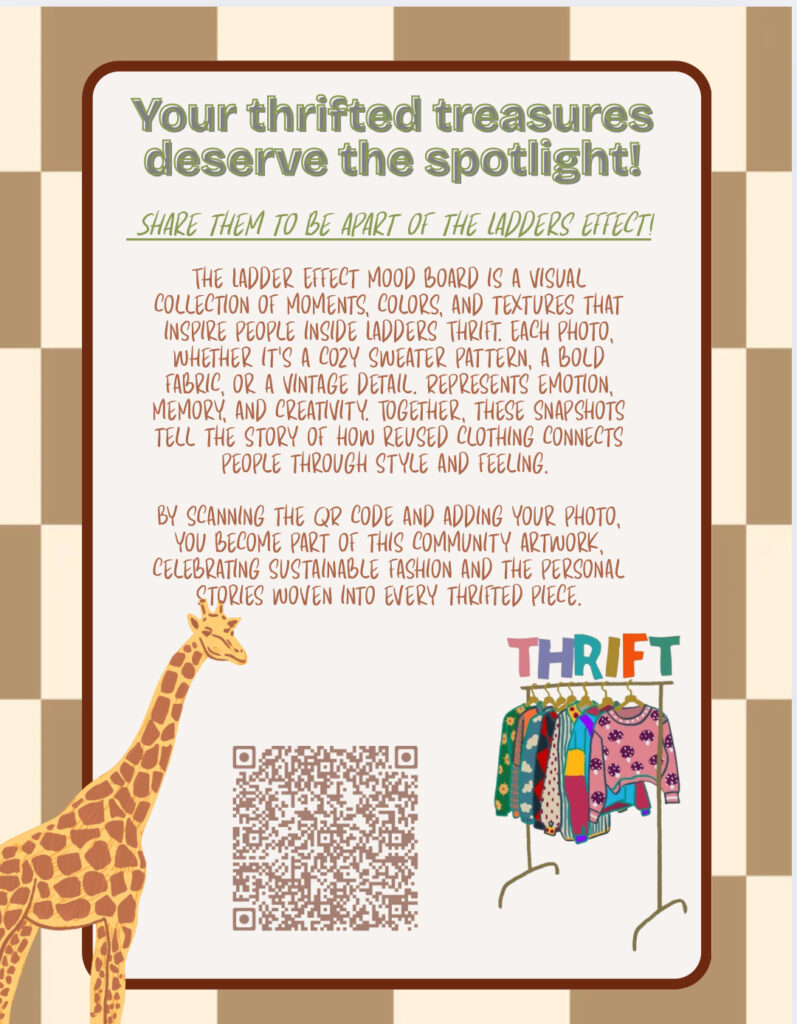
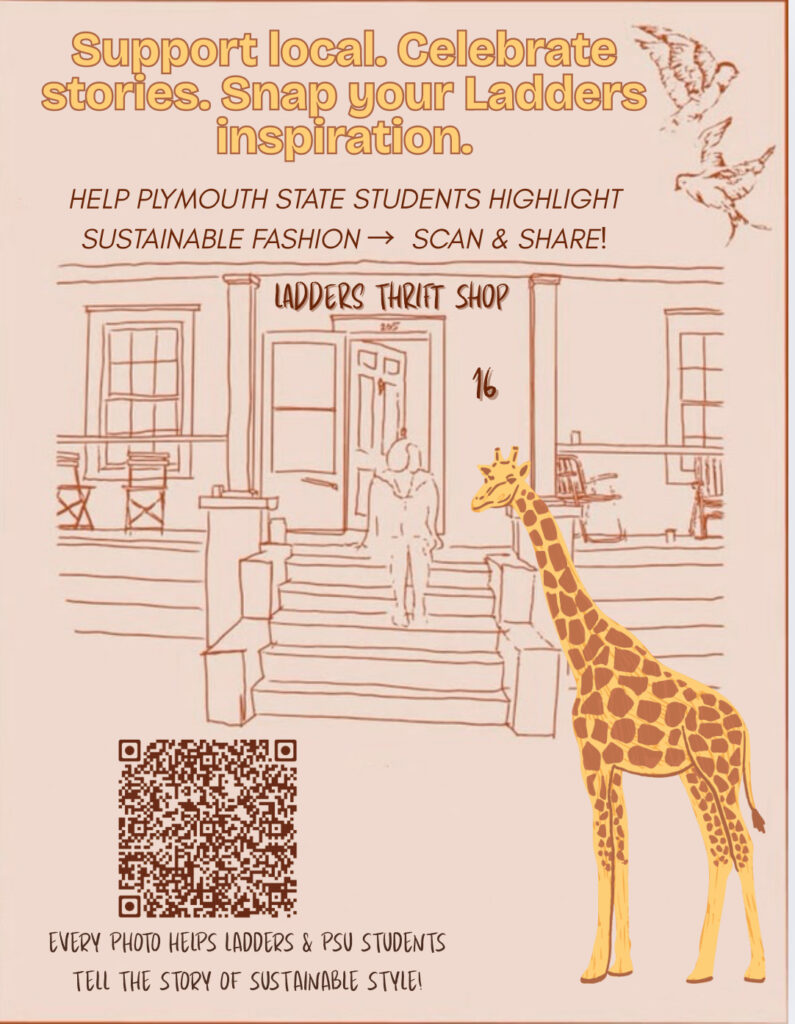
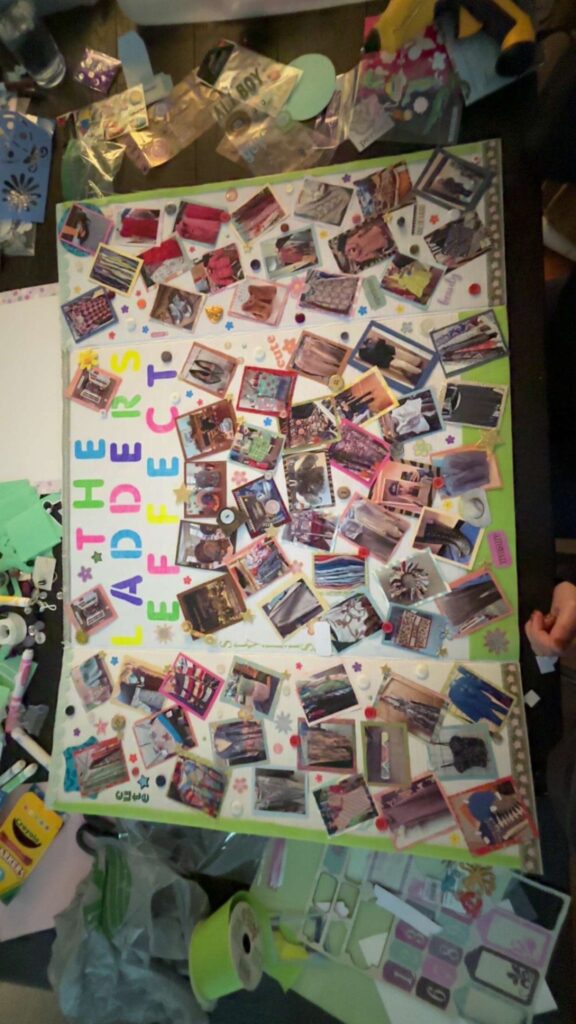
    This semester, I had the chance to collaborate with two classmates on a project with Ladders, a local shop that really highlights the creative and meaningful side of sustainable fashion. Our project, called “The Ladder Effect,” was all about capturing the emotional stories behind the items in the store and involving both staff and shoppers. We created small flyers to place around the store like in the fitting rooms, by the register, and at the door as well as on campus, each with a QR code. People could use the code to upload photos of anything that inspired them like textures, colors, patterns, or outfits they were trying on. Those photos became part of a community mood board, which visually tells the story of creativity, personal expression, and sustainable fashion.

    One of the biggest challenges came when we were finalizing the idea. We wanted to make it appealing to teenage users as well as adults, which meant thinking about how to make the language and visuals accessible and engaging. At first, we weren’t sure if the flyers or QR code would actually get people to participate. To work through this, our group tested different flyer designs, simplified the instructions, and added prompts like “Share what inspires you today.” It ended up working really well, we collected about 50 responses, which made the mood board feel lively, diverse, and full of personality.

    The final steps of the project involved curating all the submissions and arranging them into a visually cohesive digital mood board. Our team spent a lot of time deciding how to balance colors, highlight different images, and make sure each submission felt seen. Working through this process made us think a lot about the Habits of Mind, like using an integrative perspective to connect all the contributions into one story, and purposeful communication to make sure the board conveyed the emotions behind the photos. We also practiced self-regulated learning, testing layouts and making adjustments as needed so everything flowed visually.

    Sharing the final mood board with Ladders and the campus community was incredibly rewarding. People seemed genuinely excited to see their contributions displayed, and it was fun to watch them recognize their own photos alongside others. Seeing how a simple idea of encouraging people to share what inspires them, could turn into something visually engaging and meaningful for the community was really fulfilling. It showed me how creativity and collaboration can bring people together, spark conversations, and highlight the personal connections we all have with fashion. The positive reactions from both staff and participants made all the planning, testing, and adjustments our group made feel worthwhile.

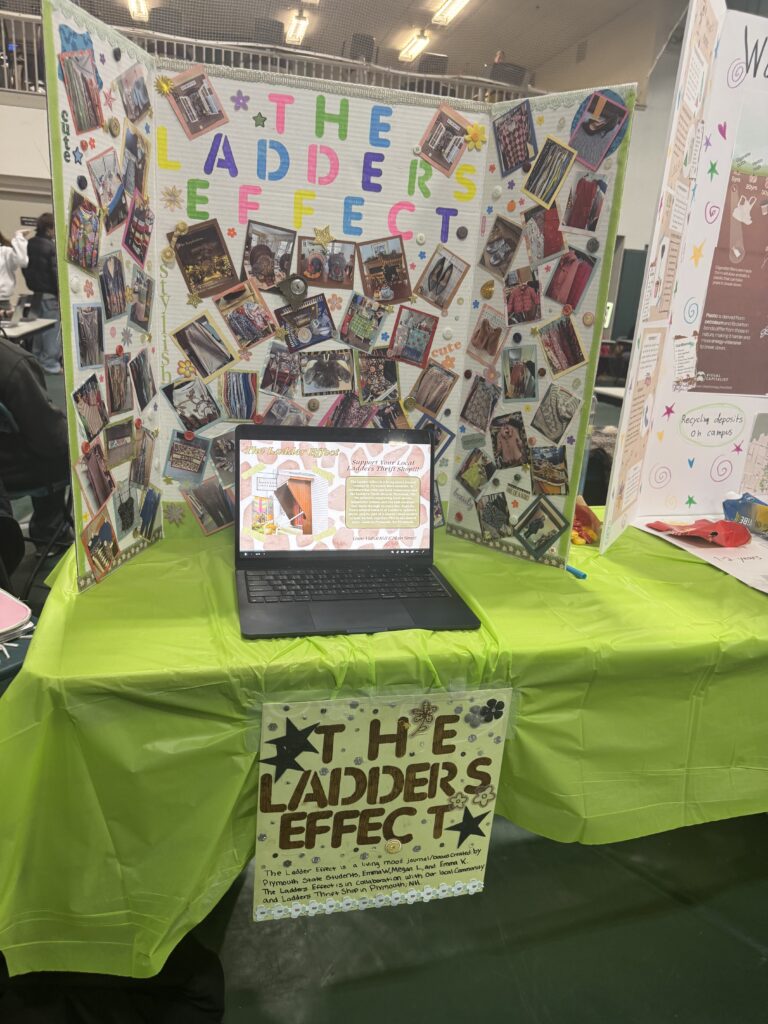
    To give readers a better sense of the project, i’ve included an image of our project at the showcase, which shows all the submissions coming together visually. This project wasn’t just about making something look nice, it helped our group practice creativity, collaboration, presenting ideas to peers, and thinking critically about how people engage with fashion. The Ladder Effect was a full circle experience, from brainstorming and testing ideas to seeing the impact of the project in the real world.
  • Reflecting on My Capstone Experience and Future Skills

    This semester in the Integrated Capstone course has been one of the most meaningful parts of my education so far. The class gave me the chance to work on a signature project in the global fashion industry, which required me to combine my disciplinary knowledge with broader Habits of Mind. From the very beginning, I realized that this course was about more than just completing assignments, it was about learning how to think critically, plan strategically, and work collaboratively across disciplines. Every decision, from brainstorming ideas to finalizing the project, reflection, experimentation, and creativity.

    One of the most valuable skills I developed in this class was collaboration. Even though projects often included individuals from different majors, I learned how to communicate effectively, listen to diverse perspectives, and integrate ideas into a cohesive project. This aligns with the forming, storming, norming, and performing framework for team development, which helped me understand the natural challenges of group work and how to overcome them (Indeed, n.d.). For example, early in the project, our group struggled to create the final project direction. By listening actively and weighing everyone’s contributions, we eventually found a plan that combined our strengths and allowed each member to contribute meaningfully.

    Another area where I grew significantly was in presenting and talking to peers. Sharing my ideas and progress with classmates required confidence, clear communication, and the ability to respond to feedback. Over time, I became more comfortable explaining my creative choices, discussing research findings, and articulating how my work connects to larger goals. This skill will be important in my future career, especially in fields like marketing, fashion, or content creation, where pitching ideas, collaborating with colleagues, and communicating with clients are daily responsibilities.

    Structured decision making was also a key part of the class. Our projects required constant choices about design, messaging, and research methods. Using approaches similar to the decision making models discussed by MIT Human Resources (MIT HR, n.d.), I learned to evaluate options critically, consider outcomes, and implement strategies effectively. For instance, when deciding how to incorporate sustainability practices into our project, I had to research industry standards, evaluate their feasibility, and select the most impactful options. This experience taught me to approach problems methodically, which will be essential in professional settings.

    The technical and creative skills I gained were equally valuable. For my own contributions, I worked with digital tools like Photoshop, combining images, layering elements, and adjusting colors to create a professional and meaningful visual story. Beyond the technical side, I learned to think like a designer and storyteller, how to use visual elements, balance, and movement to communicate a message. The capstone also showed the importance of self-regulated learning, encouraging me to reflect on what works, what needs improvement, and how to adapt. The skills I practiced in this course like collaboration, presenting ideas, structured decision making, technical execution, and self-reflection, will support my career goals and shape how I approach challenges in my personal life. For a clearer sense of my work, I’ve included an image of our poster board for our final project, which shows how all the elements and ideas came together visually.

    References
    Indeed. (n.d.). Forming, storming, norming and performing: Team development. https://www.indeed.com/career-advice/career-development/forming-storming-normingMIT Human Resources. (n.d.). Decision-making models. https://hr.mit.edu/learning-topics/teams/articles/models

  • Evolving The Ladder Effect

    Our project has started to come to life in ways that feel real. We recently put up flyers at the local Ladders in downtown Plymouth and at Step Ladders, and people are already scanning the QR code. The responses have slowly started coming in, and it’s so cool to see people upload photos of their favorite thrifted finds and share short captions about why they chose them. Those photos will become part of our digital mood board called The Ladder Effect. It’s a space where we can show how style, emotion, and community all connect through the Ladders thrift shop. Seeing this engagement has made me think more deeply about how psychology and marketing both play a role in the story we’re telling.

    Our research helped us understand that thrifting is not just about affordability or sustainability,  it’s also emotional. In the article The Not-So-Fashionable Side of the Thrifting Industry, Nikki Palella explains that “less than 10 percent of clothing donations are actually sold in stores” (Palella, 2021) most are even sent overseas. That fact made me realize that the real heart of our project shouldn’t be about donation at all, but about the meaning and reuse of clothing that already exists in our community. Thrifted pieces hold memories and identity, and when people share those pieces through The Ladder Effect, they are also sharing part of who they are. This shows the Habit of Mind integrative perspective, because our project is combining sustainability, psychology, and visual storytelling in a way that feels connected and purposeful.

    From the psychology side, we’ve learned about enclothed cognition, the idea that what we wear can influence our mood, confidence, and behavior. This concept explains why so many people describe feeling “like themselves” when they wear something thrifted that tells a story. Even though the responses are still coming in, it’s already clear that clothing is deeply emotional and tied to personal identity. The photos we hope people will continue to upload will highlight how self-expression can connect to sustainability and community. This insight reflects the Habit of Mind self-regulated learning, since we’re adapting our project in real time based on how people are responding and what they choose to share.

    The marketing connection has been just as interesting. Our flyers and mood board are not traditional advertisements, they are community storytelling tools. Instead of trying to sell something, we are creating engagement by letting real people represent the brand. This is a form of community marketing and user-generated content, where authenticity becomes the campaign itself. Research on sustainable marketing shows that people connect more deeply with visuals that feel personal and genuine. That’s what we’re aiming for with The Ladder Effect. We want to show real thrift joy, color, creativity, and belonging through the way people express themselves. It’s the Habit of Mind purposeful communication in action, because every design and post is meant to share a feeling, not just a message.

    Reading about the decision making process explains that teams using a consensus approach need to make sure “..every individual has an opportunity to participate…” (Stein, n.d.) We used that model when deciding how to collect and present our data. Each member shared ideas for the flyer prompts, layout, and social media plan, and we made final choices together. That teamwork shaped how we launched the QR flyers and how we’re building the digital mood board. It showed me how psychology and marketing don’t just shape the project itself, they also shape how we work as a team to bring it to life.

    As we continue collecting photos and reflections, I can see how this research has completely shaped our vision. The Ladder Effect isn’t just a mood board about thrift fashion, it’s a reflection of how people feel when they find something that represents them. It’s design that expresses community, identity, and emotion. Every photo and quote that gets added to it shows a small piece of what makes Ladders special. That mix of research, creativity, and emotion is what makes this project meaningful to me and what makes it more than just a class assignment.

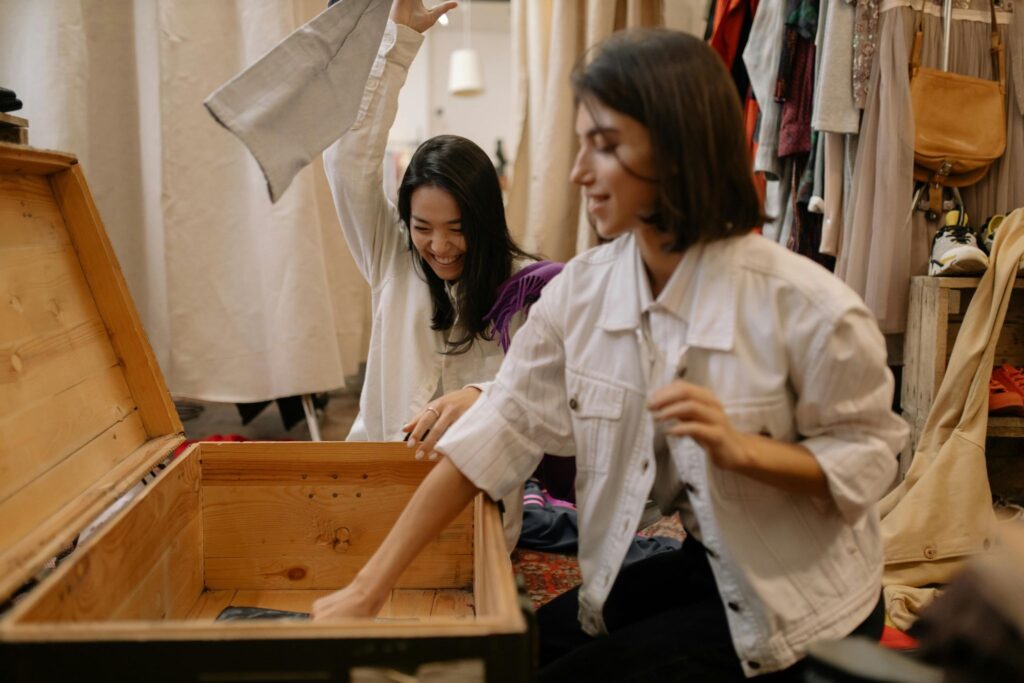
    Photo by cottonbro studio on Pexels. “Women Removing Clothes From the Chest” [Photograph]. Retrieved from https://www.pexls.com/photo/women-removing-clothes-from-the-chest-6069557/

    Palella, N. (2021, October 1). The not-so-fashionable side of the thrifting industry. Q Magazine, University of Illinois. https://q.sustainability.illinois.edu/the-not-so-fashionable-side-of-the-thrifting-industry/

    Stein, J. (n.d.). Decision-making models. Massachusetts Institute of Technology Human Resources. https://hr.mit.edu/learning-topics/teams/articles/models

  • The Ladder Effect

    Arriving at our current project plan took time. At first our group had multiple ideas and we were not sure which direction felt right. The one thing that always kept resurfacing was the moodboard concept. It kept showing up because it blended both marketing and psychology in a way that felt natural. After talking more deeply about psychology, marketing and student identity we realized we wanted our project to explore the connection between emotion and visual expression. That was when things finally started to click. This process itself showed the Habit of Mind called integrative perspective because we were combining fields that normally do not meet in one project. Our readings talk about how objects or visuals can carry emotional meaning and I kept thinking about that while we were brainstorming. Clothing or a symbol or even color can hold mood memory and identity. That idea guided us toward our new direction.

    We recently shifted from the Ladders clothing drive to a concept that feels more original to us. Now, we plan to design our own flyers and photos, using these visuals to guide students into a digital mood journal experience. Students will reflect on their emotions through images and prompts, then see how these reflections connect to their daily emotional patterns. This approach still bridges psychology and design, but gives us more creative control. We get to build a visual language that uses genuine emotional reflection, rather than focusing solely on clothing donation. This shift reminded us that good ideas evolve when you step back and let the project grow into what it really wants to be.

    Our next step is to develop the overall look and feel. We want to research mood journaling and understand how reflecting on our feelings actually helps mental wellbeing. Then we will create a system that lets students reflect on their mood and connect that feeling to our visual symbol. The Blog Post Style Guide reminds us that communication should be purposeful and centered on an audience. So our design choices need to actually match the emotional message we want to communicate. This means doing research and being thoughtful instead of just designing what looks cute.

    In our group each member brings something different. I bring the marketing and visual branding perspective. I know how to create a consistent look and message and how to translate an idea into a campaign concept. The other two members are studying psychology. They understand how mood and self reflection work and how visuals influence how people think and feel. Together we combine art design and behavior science. At the same time we still have some gaps. We are not sure how we will measure impact yet. We need to learn more about how to track emotional change or engagement. This is where we want to do more research and possibly ask for guidance so we can make the project meaningful and not just something aesthetically interesting.

    This project is pushing me and that is good. It is making me think beyond design. I have to bring in research and strategy and decision making. This is the Habit of self regulated learning because I am not waiting to be told exactly what to do. I am learning through doing and adjusting along the way. If this project works, the visuals won’t just be pretty pictures. They’ll help students notice and reflect on their emotions, recognize patterns in their daily lives, and feel more in touch with themselves. That kind of creative work, where design actually supports real personal reflection, is what matters most to me.

  • How College Is Shaping the Way I Learn

    When I started college, I was not aware of what the Habits or Mind were and how they were used in my life. Over time though, I’ve realized that the four Habits of Mind, purposeful communication, problem-solving, integrated perspective, and self regulated learning were all around. They shape how I talk with people, how I deal with stress, and how I keep myself moving forward. I’d say I’m climbing in a couple of these areas and staying still in others, but either way, I’m starting to notice where I’ve grown and where I still need more practice.

    Purposeful Communication: More Than Just Talking

    For me, purposeful communication is more than writing a paper or reading off a slideshow. It’s about connecting with people in a way that makes sense to them. Talking to people, especially in front of a group, has always been scary for me. I tend to overthink what I’m saying. I’m working on building confidence and remembering that communication isn’t about being perfect, it’s about making meaning. PSU defines purposeful communication as “the construction of meaning through interactions with texts and people and the creation of new messages” (Plymouth State University, 2022). It reminds me that communication looks different depending on who I’m talking to. I’m still figuring it out, but I can see myself getting better little by little.

    Problem-Solving: Learning Not to Give Up

    Problem solving is the habit where I’ve probably seen the biggest change. It means  recognizing a challenge, trying out solutions, and adjusting when things don’t work. I used to give up too quickly if something felt too hard or if I failed the first time. Now I try to see setbacks as part of the process. There were times when assignments felt impossible, but I’ve learned to push through and find another way instead of giving up. PSU explains that problem solving “requires the ability to think creatively, adapt and extend one’s thinking, and persist despite failure” (Plymouth State University, 2022). That’s exactly what I’ve learned to not quit just because something doesn’t work right away, and I’m proud of how I’ve stuck things out more than I used to.

    Integrated Perspective: Seeing the Bigger Picture

    For integrated perspective, I’d say I’m already pretty strong. I try to see issues from more than just my own point of view, and I’ve found that listening to others actually changes how I think In the article Slow Interdisciplinarity, it explains that this mindset means having “respect for multiple ways of knowing” (Goode, 2019) This means recognizing that different perspectives each have value, and in class discussions it helps me approach conversations with more openness. Instead of just waiting to share my own ideas, I pay attention to what others are saying, and that often shifts the way I respond. It makes discussions feel more like a conversation rather than separate opinions being shared.

    Self-Regulated Learning: My Strength

    Finally, self regulated learning is where I feel most confident. I actually work better independently, because it lets me set my own pace and goals. Self regulated learning is all about being motivated, monitoring your progress, and taking responsibility for your growth. PSU points out that self-regulated learners “take intellectual risks, persist in the face of challenges, and learn from their mistakes” (Plymouth State University, 2022). I like keeping myself accountable. If something doesn’t work, I reflect and try again, and I’ve noticed that this approach helps me not only stay on track with assignments but also feel more in control of my learning. It makes me trust myself to figure things out, which is why I’d say this is the habit of mind that feels most natural to me.

    Conclusion

    Overall, each Habit of Mind shows up in different ways in my life. Purposeful communication is still a challenge, but I’m working on being less nervous and more intentional. Problem solving has taught me not to quit right away. Integrated perspective comes more naturally to me because I genuinely like hearing different viewpoints. And self regulated learning feels like my strength, since I do better when I can work independently and hold myself accountable. Together, these habits aren’t just skills for school, they’re becoming part of how I grow as a person and how I’ll keep moving forward in the future.

    Dzivina, A. (2023). Self Care 1_01. iStock. https://www.istockphoto.com/vector/self-care-1-01-gm1618979502-531546818

    Source: Aleutie. (2016). Practice public speaking. iStock. https://www.istockphoto.com/vector/practice-public-speaking-gm528066716-92904637

    Goode, J. (2019). Slow Interdisciplinarity. Hybrid Pedagogy. https://hybridpedagogy.org/slow-interdisciplinarity/

    Plymouth State University. (2022). Self-regulated learning. https://www.plymouth.edu/institutional-learning-outcomes

  • Hello world!

    Welcome to WordPress. This is your first post. Edit or delete it, then start writing!